Most of us have been concerned about the carbon footprint of the goods we purchase at least once. Transportation of these goods is generally what elicits the most dread, however, this industry also plays a significant role in the European economy. It contributes approximately 5 percent to the EU’s GDP and provides employment to over 10 million people.
However, this critical system comes with a heavy price – greenhouse gas emissions, pollutants, noise pollution, road accidents and traffic congestion. Currently, transportation emissions make up a significant portion of the EU’s total GHG emissions, accounting for roughly 25 percent.
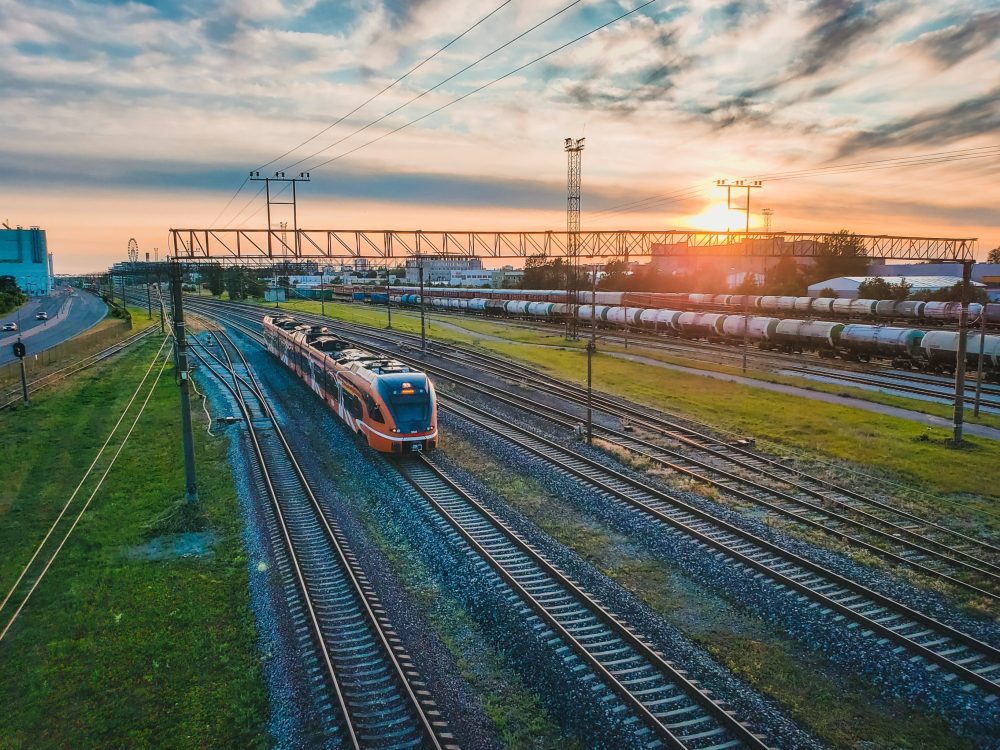
But, there’s hope. Some smart folks have come up with the concept of combining freight with passenger travel in a whole new way. The concept is simple – think of it like hitch-hiking for cargo goods. If there’s empty space on a passenger train, why not use it to transport goods from A to B? This way, occupancy is optimised, fewer journeys required, time and cost saved, and emissions greatly reduced.
So-called “Freight on Transit” or “FOT” is a novel logistics concept that could help to lead us towards a more sustainable future. But, it also requires good coordination and a solid infrastructure to support it. This could well be a spanner in the works.
Green Mobility – Digital solutions for a climate-neutral future
Autonomous vehicles, e-mobility, AI-controlled traffic planning, new modes for moving from A to B — what will the mobility of tomorrow look like?
We present the digital solutions being proposed for climate-neutral transport and logistics and discuss the new challenges of “digital mobility” in this dedicated special feature.
The Challenges Faced by the Transportation Sector
Freight transport can largely be carried out in an environmentally friendly way by rail. In much of Europe, freight transportation is still too reliant on trucks.This is partly due to the fact that only a fraction of companies have a connection to rail networks. But it wasn’t always like this. This means that there is potential for us to reconsider rail as a suitable logistics option. In Germany currently only about 19 percent of goods are currently transported by rail.
This is why projects like the non-profit “Pro-Rail Alliance” are promoting the improvement of rail transport. The alliance of civil society and the rail industry unites more than 200 companies and associations with a total of more than 2.5 million individual members. Germany’s most unconventional transport alliance includes environmental associations and transport companies, trade unions and financial service providers, universities and vehicle manufacturers as well as consumer protection organizations.
The German Federal Transport Minister wants to speed up the renovation of the struggling railway network, calling it “first aid.” The Rail Acceleration Commission’s final report proposes measures to improve punctuality, such as speeding up approvals for new switches, longer passing tracks, and electrification.
The Commission also suggests establishing multi-year financing funds. Revenues from the lorry toll will be used for an expansion and modernization fund. The current railway network is overcrowded and in poor condition, leading to delays and cancellations for customers. The commission calls for major construction and expansion measures to improve the network but acknowledges that it is significantly underfunded.
What Needs to Happen?
So, what do we need to do to tackle the challenges of the transportation industry while staying in line with sustainability goals? There are two main areas of impact: The first is to reduce the number of trucks on the road by switching to more sustainable modes of transport. The second is utilizing digital tools to increase the capacity and efficiency of transportation.
Green Transport Needs Digital Networks
With the rise of e-commerce and in an increasingly globalized world, the demand for quick and efficient delivery is only increasing. But, what about the limitations of traditional transportation methods? How can they keep up with the growing demand while also being environmentally responsible? The answer could be digital.
Shifting towards more rail-based transport and increasing the efficiency of the supply chain through digitalization are fundamental actions toward a more sustainable future for freight transport. For big supply networks, this will need big changes in their infrastructure. But for small suppliers, especially in the small goods segment, there might already be another alternative opening up.
How Can Passenger Trains Offer a Solution?
In the overlap of digitalization and the utilization of railway transport, there are now attempts to offer efficient, affordable, and sustainable logistics even in rural areas. A feasibility study investigated in the kombiBAHN project looked into whether it was possible to integrate rail passenger transport into regional logistics using digital systems.
The project found that freight transport by passenger rail is feasible. When evaluating the passenger count it showed sufficient capacities for logistical use, and most of the 29 stations studied were found suitable for freight transport. This included among other things, access, platform heights, and possible micro-hub locations.
It would however be necessary to adjust contractual and liability regulations for the logistical use of the stations.
On the basis of these results, a digital concept was developed to guide and secure transport processes. This concept includes timetable data, routes, and obstacles at the stations.
A new project, CargoSurfer, has begun as a follow-up to the kombiBAHN project. Building on the results of the feasibility study, CargoSurfer aims to develop and implement a platform for arranging freight capacities. This platform will also include an AI-based forecasting tool, which will ensure the timely delivery of goods by securing transport connections.
Overall, the development and implementation of CargoSurfer is a promising step toward improving the logistics industry and ensuring a more reliable and sustainable transportation system for businesses and consumers alike.

By using digital tools to coordinate and automate the utilization of empty passenger trains for freight transport offers a few core benefits:
- Maximizing the use of existing infrastructure, reducing the need for new investments in transportation infrastructure.
- Offering an alternative for smaller companies that usually wouldn’t have access to railways and would have to rely on truck transport.
- Utilizing the already existing public transport network to reach remote places in rural areas.
- Reducing road congestion, leading to a decrease in emissions and an improvement in air quality.
- Possibly increasing efficiency and speed of transportation, resulting in cost savings and improved delivery times.
- Adding to the shift away from truck transport and towards a greener, rail-based delivery chain.
While this solution can play an effective part in certain environments, sectors, and goods, it won’t solve the bigger lack of railway transportation infrastructure, in Germany and beyond.
Internationally, we still need to invest in improving the conditions for e-mobility and rail-based transport. Companies need to have better access to railway transport and the infrastructure needs to be able to support heavier traffic.
But what these projects show is that sometimes we just need to find a smart way of utilizing what’s already there in a more effective way.