
Cement is the lifeblood of urbanisation – especially for expanding metropolises in the Global South. However, although cement is a cheap, reliable building material, it’s also one of the dirtiest. Overall, production of cement contributes about eight percent of global carbon emissions – a huge amount for a single industry.
These carbon emissions derive from multiple sources. Firstly, cement requires large amounts of heat – requiring electricity, but the actual process of heating limestone to produce cement also directly releases carbon dioxide.
Biomason is a US-based startup looking to shake up this dynamic. Like other recent projects we’ve discussed, Biomason has turned to nature to inspire a new method of producing cement and concrete. Termed biocement, Biomason uses a similar process to how calcium carbonate is produced within coral reefs and shells. In essence, it is a reversal of the traditional method in which limestone is heated in order to extract its carbon.
Coral-Inspired Cement

To create its biocement, Biomason starts with recycled aggregate. This is usually small pieces of stone – in Biomason’s case, granite – which are then held together by cement to produce concrete. To this recycled granite a special strain of natural bacteria is added. The bacteria has been described as a wild-type strain found across the world that has been left non-modified by Biomason. Usually, such bacteria builds up cement-like materials over hundreds or even thousands of years. However, a special solution containing carbon, calcium and the nutrients is added to the bacteria, allowing it to bind together the aggregate in a matter of days.
Biocement seems to provide several distinct advantages over traditional Portland cement. Firstly, it requires no heat, the bacteria can get to work even at ambient room temperature. Meanwhile, while cement takes up to 28 days to cure to its full strength, the biocement is finished after only 72 hours. Furthermore, Biomason claims their cement is three times stronger than traditional cement and is 100 percent recyclable. For every kilogram of biocement used instead of traditional cement, one kilogram of CO2 that would otherwise be released is eliminated.
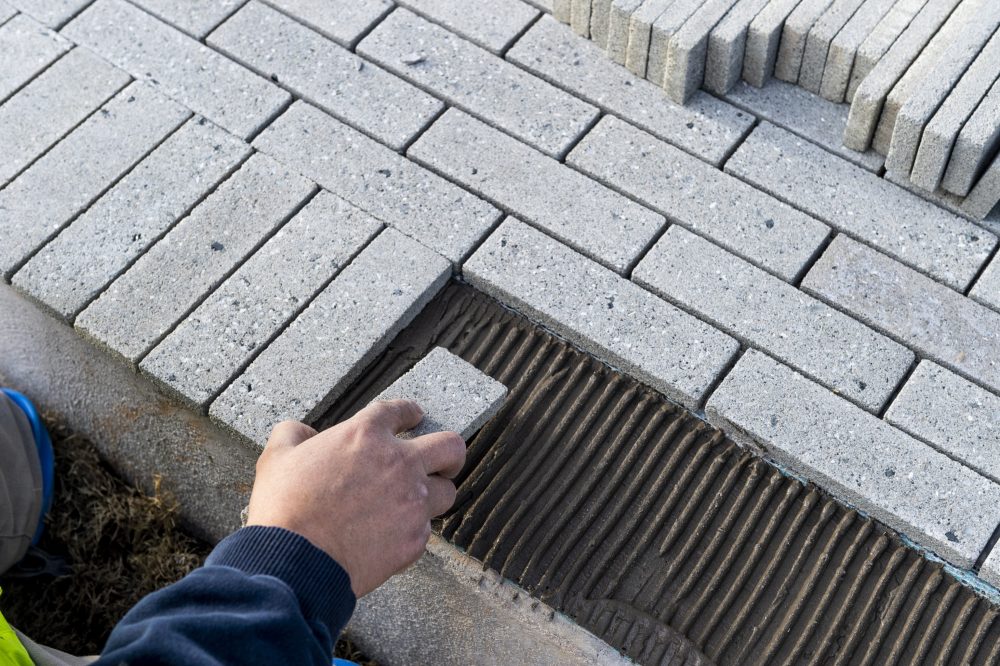
Currently, Biomason is producing a small number of their first product, dubbed bioLITH. This is a small brick-like tile which can be used for internal and external construction in a wide range of applications. Another advantage of the bioLITH is it is lighter than normal stone, making its transport and use easier and reducing carbon emissions from heavy transportation. It can also be used in exactly the same way as traditional building materials, meaning no new methods, training or tools are required.
Ensuring biocement can fit into preexisting construction and cement industries is one of Biomason’s primary goals. In order to speed up adoption and reduce scaling costs, the process of producing biocement could use preexisting concrete production facilities.

Biomason certainly has some big names interested in its products, most notably the US military. The Department of Defence Advanced Research Project Agency, DARPA, has provided Biomason with funding to take their idea even further and develop so-called Engineered Living Marine Cement, which uses a combination of self-sustaining natural marine microorganisms that can source their nutrients from seawater. This would result in a self-sustaining, self-healing cement ideal for underwater construction applications.
Another military application – the rather dramatically named Project MEDUSA – also hopes to use Biomason’s expertise to develop an agile cement product which can be used to quickly build concrete structures in remote areas, such as landing pads for helicopters and VTOL aircraft.
However, Biomason also has some civilian contracts in the pipeline. Retail giant H&M recently announced it planned to tile the floors of its stores with bioLITH blocks.


